Truck Window Tint in Michigan: What the Cab Can Take
A pickup in Michigan is not a special case under the tint statute. The windshield and the front doors still get only a strip along the top edge. The glass behind the driver, including a large rear cab window, can take nonreflective film. Heat in that cab is a film question, and ceramic is the film we recommend when the cabin is the complaint.
Start with truck window tint. Related reading: Michigan tint laws.
Tell us the year, make and model. The quote is free, and we reply the same business day.
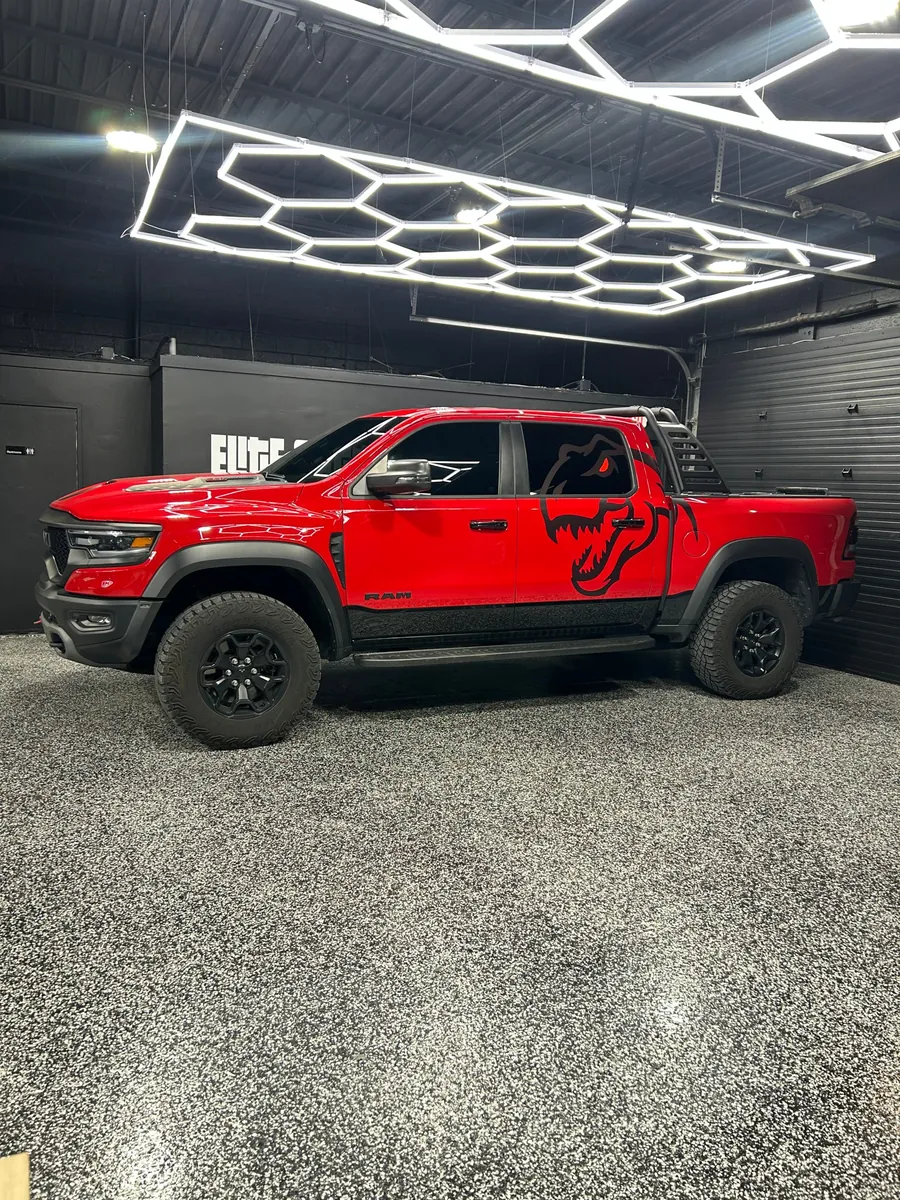
Does a truck follow a different tint law than a car?
No. Michigan's window tint law is the same statute for the truck as for a car, and it sets no darkness percentage.
Michigan's window tint law is MCL 257.709, and it covers where film can go and how reflective it can be rather than how dark it can be. In front, tinted film is limited to a strip along the top edge; behind the driver, the statute exempts nonreflective smoked or tinted glass and nonreflective film. It sets no darkness percentage. This is not legal advice. The window-by-window reading is the Michigan tint laws guide.
The windshield allowance is a strip along the top edge, no more than 4 inches from the top or lower than the shade band, whichever is closer to the top. The front driver and passenger windows get that same top-edge allowance, including the sidewings adjacent to and forward of those windows. Other film on them, reflective or nonreflective, is not allowed. A crew cab does not get a second rule for the front doors because the truck is tall.
Rear side windows and the rear window are where nonreflective smoked or tinted glass and nonreflective film are exempt. A sliding rear window is still a rear window. Silver or gold reflective film is out: material with a total solar reflectance of 35% or more in the visible light range is barred. If film or a load blocks the view through the rear window, the truck needs two rearview mirrors, one on each side, adjusted for a clear view of the highway behind. This is not legal advice.
Which truck windows are worth filming first?
Start with the glass behind the driver if the complaint is heat or privacy. The windshield is a separate, smaller strip, and it is the right glass for glare from low sun.
| Glass | What we can do | Why a truck driver asks |
|---|---|---|
| Windshield | Top strip only, within the statute | Low sun on I-75 and I-696, morning and evening glare |
| Front doors | Same top-edge strip, including sidewings | The statute, not a darker full door |
| Rear cab and rear window | Nonreflective film | Heat, rear-seat privacy, cargo privacy |
A truck windshield is a lot of glass, and it is the pane that takes the low winter sun and the glare off snow. That is a windshield job, not a reason to darken the front doors. The page for that strip, and for a windshield question, is windshield tint. Film does not replace sunglasses.
Privacy on a truck is the rear of the cab and whatever you can see through the back glass into the bed area, not a smash-and-grab claim. We do not sell tint as glass that holds together. The film we install is ceramic or carbon, on the window tinting in Madison Heights.
Which film belongs on a truck that sits in the sun?
Ceramic is the film we recommend when the cab is hot. Carbon is the lower-priced film when you want color stability and still want some heat cut.
We install two films: ceramic and carbon. Ceramic is the premium film and the one we recommend when the complaint is a hot cabin. Carbon blocks infrared light and reduces heat too, though less than ceramic, and it is the lower-priced film with color stability and a matte look. Both are rated for 99% UV rejection. Both are non-metallic, so they do not interfere with a phone, GPS or radio the way old metallic film could. Neither turns purple the way dyed film does. We do not install dyed film.
A black or dark truck parked at a job site, or in a lot off Van Dyke, Mound, or Dequindre, is the usual heat complaint. The steering wheel and the seat tell you before a meter does. Ceramic is the answer we give for that. Carbon is the answer when the invoice matters more and you still want a film that holds its color. Both are on the quote. The shade, 20% or 35% or something else on the rear glass, is chosen after the film, and the 20% vs 35% guide explains why the smaller number is the darker shade.
Factory privacy glass on the rear of some trucks already darkens that pane. Film stacks on top of it. We look at the glass that is on the truck, not at a sample card alone. If the rear is already dark from the factory, say so when you book, and we will talk about heat versus a darker look.
How long is a truck in the shop, and what changes the quote?
Most vehicles take 2 to 4 hours once the glass is ready. A truck quote moves with the cab, the film, how many windows, and whether old tint has to come off.
Most vehicles take 2 to 4 hours once the glass is ready. A computer plotter cuts the pattern. We do not hand-cut it on the glass. We inspect every window before the car leaves. Do not roll the windows down for 5 days, and do not wash the film for 30 days. Small water pockets for 3 to 7 days are normal while the film finishes curing.
The quote form is ealmi.com/quote. The phone is (248) 881-8204. We reply the same business day. There is no coupon. The number moves with the vehicle and the work, and we will not invent a flat price in an article.
Removal of bubbled, purple or peeling film is its own line and it adds time. In our experience, cheap tint fails after six months. That is the second visit people do not plan for. New film goes on bare glass only. The removal page is tint removal, and the new film is still ceramic or carbon.
If you already know the vehicle, send it now and we will quote that car.
What about the paint and the front clip, not the glass?
Window film does not stop a rock on I-75, and it does not solve road salt on the lower body. Those are paint problems.
Winter road salt on the surrounding freeways is a separate problem the film does not solve. Road salt on the lower body is a paint problem, not a glass problem. If the front of the truck is what you are worried about, the conversation moves to paint protection film or the truck protection page, not to a darker rear window.
The new film carries the manufacturer's lifetime limited warranty for as long as the original customer owns the vehicle. It covers peeling, cracking, adhesive failure, delamination and purple color change. Ghosting is not covered. The remedy is replacement. Keep the card and the receipt. The warranty is about the film on the glass. It is not a paint warranty, and it is not a promise about chips on the hood.
The shop is 436 E 14 Mile Rd, Madison Heights, MI 48071, off I-75 at exit 65. Hours are Monday through Friday, 10 to 6, and Saturday, 10 to 3. Sunday is closed. The car stays inside a shop that is climate-controlled, insured, and gated with an alarm. Drivers come from Warren, Sterling Heights, Detroit and Clinton Township. The statute we follow is the same one on the laws guide, checked as that guide describes.
What should you do after the truck is tinted?
Leave the windows up for 5 days, skip a wash for 30 days, and let small water pockets dry for 3 to 7 days.
A work truck is the one most likely to get a window rolled down in a drive-through the same afternoon. That is the edge that lifts. Tell anyone else who drives it. A wash bay on the way home is the other common miss. Wait the 30 days, including a rinse that feels harmless.
The longer aftercare note is caring for new window tint. If something looks wrong after the cure window, call before you peel. We would rather see the glass than hear that the sheet is already in a trash bag.
Send the year, make and model of the truck, and which windows you want filmed. We will quote that cab.