How a Commercial Wrap Earns Its Keep
People ask when a wrap pays for itself. The honest answer is that we do not know your routes, your prices, or how often someone in the next lane is ready to hire you. What we can describe is the mechanism. The vehicle already moves through your territory. A readable name and phone number let that movement do something a plain white van does not. Anything more precise than that is a guess about your business, and we will not dress a guess up as a result.
Start with commercial vehicle wraps. Related reading: fleet lettering.
Tell us the year, make and model. The quote is free, and we reply the same business day.
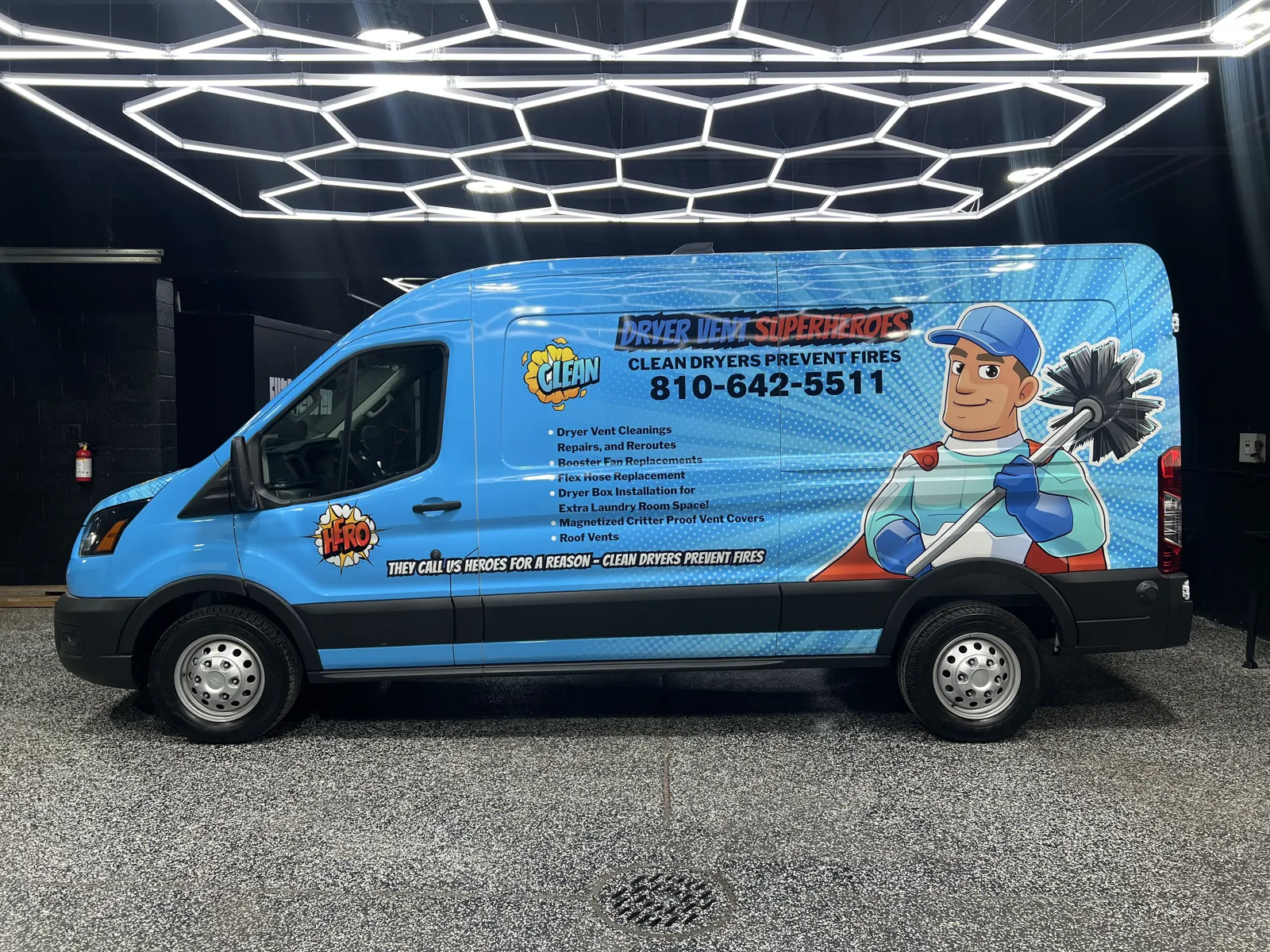
What is the wrap actually doing while you drive?
It is putting the name and the phone number on a vehicle you already operate. It does not create a route. It uses the route you have.
The van was going to the job anyway. A readable number means the person behind you at the light, or the neighbor watching the crew, can call without searching. That is the mechanism. It is not a guarantee of a certain number of calls, and we will not invent one. Your close rate, your routes, and whether anyone answers the phone are yours.
A wrap that cannot be read fails this mechanism even if it is beautiful. If the art is a mural with a tiny number, you bought a mural. The content rules are in what to put on a work van. Read them before you judge the wrap as advertising.
Lettering from $650 can do this job. A full van from $4,500 can do it louder. Louder is not automatically more calls. It is more of the vehicle committed to the mark. Choose loud when the brand needs the whole wall. Choose the door when the number is the point.
What can you track without a made-up formula?
Ask callers how they found you, for a while, and notice whether they mention the van. That is a clue, not a laboratory result.
If you never ask, you will never know whether the wrap is the reason or the website is. A simple question at the phone, for a month, tells you more than a generic claim about vehicle graphics. Write down van versus search versus a referral. If van never comes up, look at whether the number is readable before you blame the idea of a wrap.
We do not have your books. We cannot tell you the wrap will return its cost in a season or a year. Anyone who gives you a precise multiple is guessing about your business. Use the floors in commercial van wrap cost as the cost side, and use your own calls as the other side.
A parked trailer at a job site works even when it is not driving. That is time you already spend on the site. The trailer floor starts at $3,500. A box truck starts at $5,000. The flat-panel note is box trucks and trailers.
How does a consistent fleet differ from one loud van?
One van is a sign. Several vehicles with the same mark are a company people recognize the second time they see you.
Recognition is not the same as the first call. The first call needs a number. The second sighting is why matching marks matter. If every truck is a different layout, you are running several signs. If they share type and color, you are repeating one sign. Repetition is the part a single genius design cannot do by itself.
You can get repetition from lettering on five vans more cheaply than from five full wraps. If the goal is recognition on a budget, letter the set and full-wrap the one that sits at the customer's house the longest. That mix is partial versus full.
A new phone number is a real cost of a rebrand. Film can be replaced. Paint is a worse way to change a number on a fleet. If the number changes often, say so. We will not lock you into a full print that you expect to redo every season unless you want that.
What does the film do for the vehicle itself?
It covers paint from sun and light scuffs while it is on. It is not armor, and it does not fix rust that is already under it.
A wrap is a skin. It takes light abrasion and it keeps some sun off the paint. A rock can still cut it. Rust under the film stays rust. If the van is rotten at the rocker, fix that before you spend the graphic budget hiding it. We will point at paint we do not want to cover.
When the graphic is obsolete, film can come off. That is the practical difference from painting a fleet every time the logo changes. Removal is a visit, not a wish. Plan it. Do not peel a van in the cold with a heat gun and a razor if you care about the paint.
Clear protection film is a different product for stone chips on a personal car, on the paint protection film near me. Do not expect a printed van wrap to behave like a clear bra on a hood. Different material, different job.
If you already know the vehicle, send it now and we will quote that car.
Which spend is the one to question?
The full wrap you cannot read, and the door logo you expected to transform a brand that needed a whole wall. Match the spend to the job.
If you need a number on a route, $650 lettering might be the whole smart spend. If you need the van to be the brand at a customer's curb, the $4,500 floor is the conversation, plus design. Buying the large one and then shrinking the phone number wastes the wall. Buying the small one and then wishing the van were a mural wastes the opportunity. Decide which regret you are avoiding.
Design quoted separately keeps that choice visible. A cheap install with no design is how type ends up on a handle. Pay for the layout if you do not have one. It is cheaper than reprinting.
Financing via Affirm can split an invoice you have accepted. It does not make a full wrap the right size. Get the right floor first. Then decide how to pay it.
Where do you go from here?
Send the vehicle and the job you think the graphic has: a phone number, a matching fleet, or a full brand wall.
The install is at 436 E 14 Mile Rd, Madison Heights, MI 48071, off I-75. Monday to Friday 10 to 6, Saturday 10 to 3. Call (248) 881-8204 or use the quote form. Commercial wraps is the hub. Royal Oak and Madison Heights routes end at the same bay.
A full commercial wrap is 3 to 5 days. Lettering can be same-day service when the schedule allows. Tell us which one you are asking about so we do not book the wrong kind of day.
If you want a food menu on the side, switch to the food truck planning note. A menu is a different readability problem than a plumber's phone number, even though both have to be read by a person who is not standing still.
If you want a number on the van you already run, tell us the vehicle and whether you need lettering or the whole wall. We will quote that, not a payback formula.