Planning a Food Truck Wrap Around the Window
A food truck wrap has two jobs that fight each other. It has to look delicious, and it has to be understood by someone walking across a parking lot. The body might be a trailer, a box, or a van, and those do not share a price. The window, the vents, and the compartments are not decorations. They are holes in the art. Plan those first, then the hero dish, then the name.
Start with food truck wraps. Related reading: commercial vehicle wraps.
Tell us the year, make and model. The quote is free, and we reply the same business day.
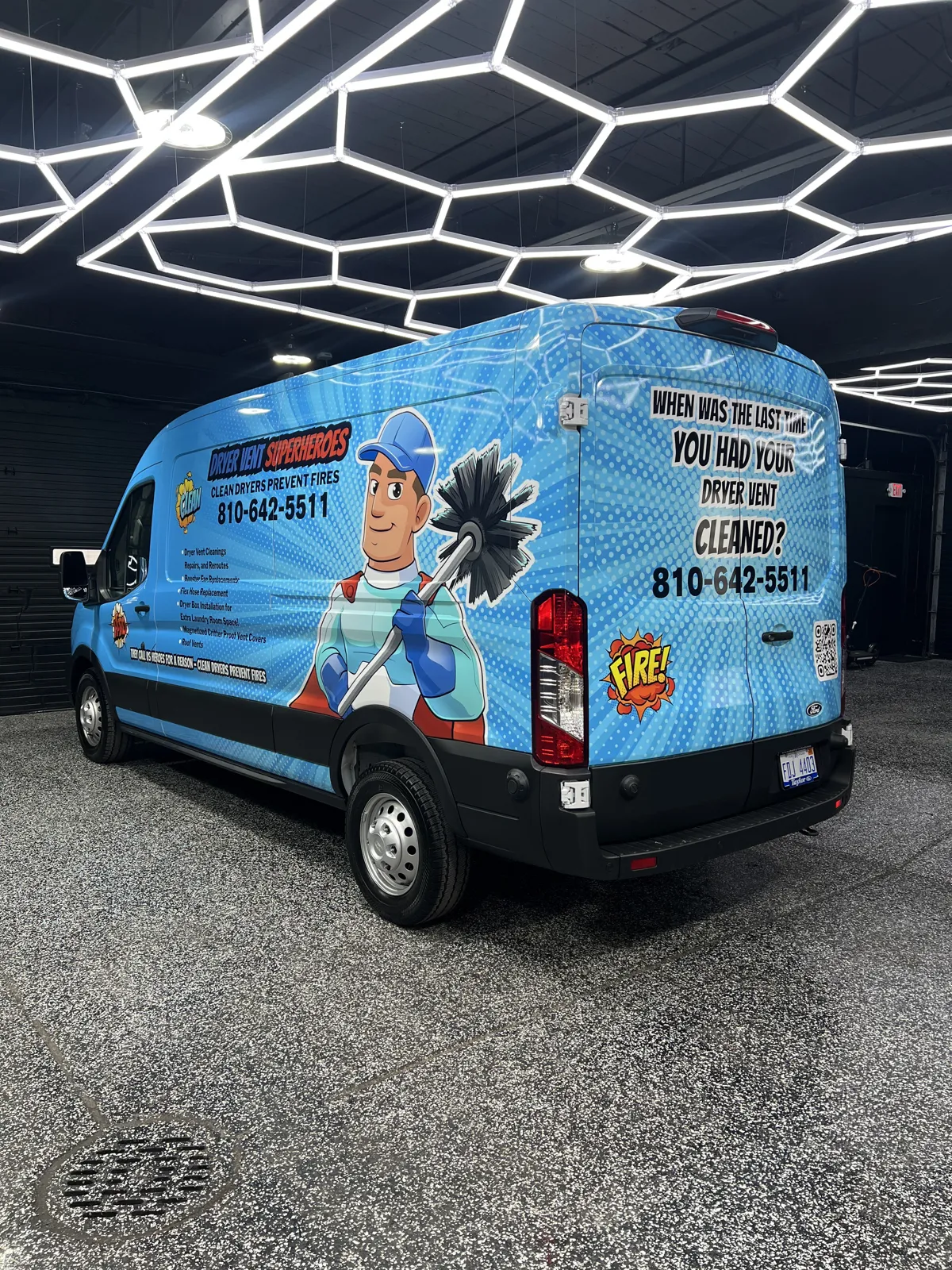
What is the body of the food truck, actually?
The price follows the body. A trailer starts at $3,500. A box starts at $5,000. A van uses the van floors. There is no separate food-truck menu price.
Concession trailers, step vans, and cargo vans all get called food trucks. They are not the same wall. A trailer floor is $3,500. A box truck floor is $5,000. A standard van full wrap starts at $4,500, a high roof at $5,500, a partial van at $2,300. Tell us which body you have before you compare a number you saw online.
The service window, the vent, and the propane cages punch holes in the art. Photograph them. A layout that ignores the window will put the best photo where the glass is. We design around the opening you serve from, not around a fantasy rectangle.
Hub pages: food truck wraps, trailer wraps, and box truck wraps. The shop hub is commercial wraps.
What should people be able to read while they decide to stop?
The name, what you serve in three words or fewer, and how to find you today. A novel on the side of the truck will not be read.
The name has to work from across a lot. The food words should be specific enough to be hungry for. Tacos is a category. A paragraph about your grandmother is a story for the menu board at the window, where people are already standing still. Do not make the moving truck carry the essay.
Hours change. A phone number or a short address that stays true is safer than hours printed so large that a seasonal change makes the truck look wrong. If hours must be on the truck, keep them smaller than the name so a piece of tape is not your rebrand.
One hero photo of a dish, shot large enough to print, beats six muddy photos. If you do not have that file, tell us. Design is quoted separately, and a bad photo will look worse when it is four feet wide. We will say so.
How should the service side differ from the street side?
The street side is the invitation. The service side has to work with the window, the customers, and the mess of service.
Put the name where people approach, and do not put essential type where arms and condiments will cover it all service. A lower band gets kicked and splashed. Keep the important words up. The window frame is a natural frame for a short line of type, not for a photo that the glass cuts in half.
The rear of a trailer is what the car behind you sees in traffic and what the line sees while waiting. Use it. A blank rear on a busy truck is a missed wall. A rear covered in ten social icons is also a miss. Name, food, one way to follow you if you truly need it.
Night markets are dark. Contrast matters more than a subtle brand color. If you serve after dusk, look at the art in a dim room before you approve it. Pretty on a laptop is not the same as readable under a parking-lot light.
What photos work, and what photos fail?
A sharp photo of the actual food, with room around it for type. A tiny file, a filtered square, or a picture you do not have rights to will not survive the print.
We need files that can go large. A social crop is often too small and too compressed. If that is all you have, we may illustrate instead, or photograph is your job before we print. We will not upscale a blur and call it print-ready.
Steam, cheese pull, and a clear hero ingredient read faster than a overhead shot of a full table. You know your food. Pick the one dish that explains the truck. The rest belong on the board at the window.
People in the photo, a customer's face, a license plate: know that the image will drive around. If you cannot use it publicly, do not send it. Design time spent on a photo you later pull is still design time.
If you already know the vehicle, send it now and we will quote that car.
How do you wash a kitchen truck without killing the film?
Grease and sauce hit the service side. Wash that film. Keep the pressure washer off the edges, and do not use a harsh degreaser as a daily bath.
The service side gets oil. A mild soap takes daily film. A harsh solvent used every night to chase grease can haze vinyl and attack edges. Wipe spills when they happen. A weekly wash beats a monthly scour. Brush tunnels are a poor fit for any wrap edge, and a food trailer has a lot of edge around compartments.
Winter storage is the other risk. A trailer that sits with road salt on the lower panels until spring will show it at the seams. Rinse the brine off even if you are not serving. The personal-car version of that advice is winter wrap care. The edges do not care that you sell food.
A full wrap on a commercial body is scheduled across 3 to 5 days. A trailer that is your only serving unit needs that planned around a weekend you can miss, or around a weekday if your business is weekend-heavy. Tell us the calendar. We will not assume you can lose a Friday.
What do you send to get a number?
The body style, photos of the window and the compartments, and the words you want read from across a lot.
The install is at 436 E 14 Mile Rd, Madison Heights, MI 48071, off I-75. Monday to Friday 10 to 6, Saturday 10 to 3. Call (248) 881-8204 or the quote form. Financing via Affirm can split the accepted quote. Design is its own line if we are building the menu look rather than placing a file you finished. Food truck wraps in Detroit are printed and installed here, not at a second kitchen.
If you also want the cab lettered and the box fully printed, say both. A box plus a cab is a normal split, and it should be visible on the quote. The general flat-side explanation is box trucks and trailers.
Same-day service is the wrong hope for a full food-truck print. Lettering on a door might be. Ask which one you need before you plan a festival week around the install.
Tell us whether it is a trailer, a box, or a van, and send photos of the service window. We will quote that body, not a generic food-truck package.