Is Headlight and Taillight Tint Legal in Michigan?
Headlight tint and taillight tint are smoked film on the lamps, usually to quiet a chrome or clear housing so it matches a darker car. They are not window tint moved onto the lights, and they are not the clear film that takes rock chips on a lens. The useful question is whether you can still see the road at night and whether the car behind you can still see you. We will not install a film that kills the beam.
Start with headlight and taillight tint. Related reading: Michigan window tint laws.
Tell us the year, make and model. The quote is free, and we reply the same business day.
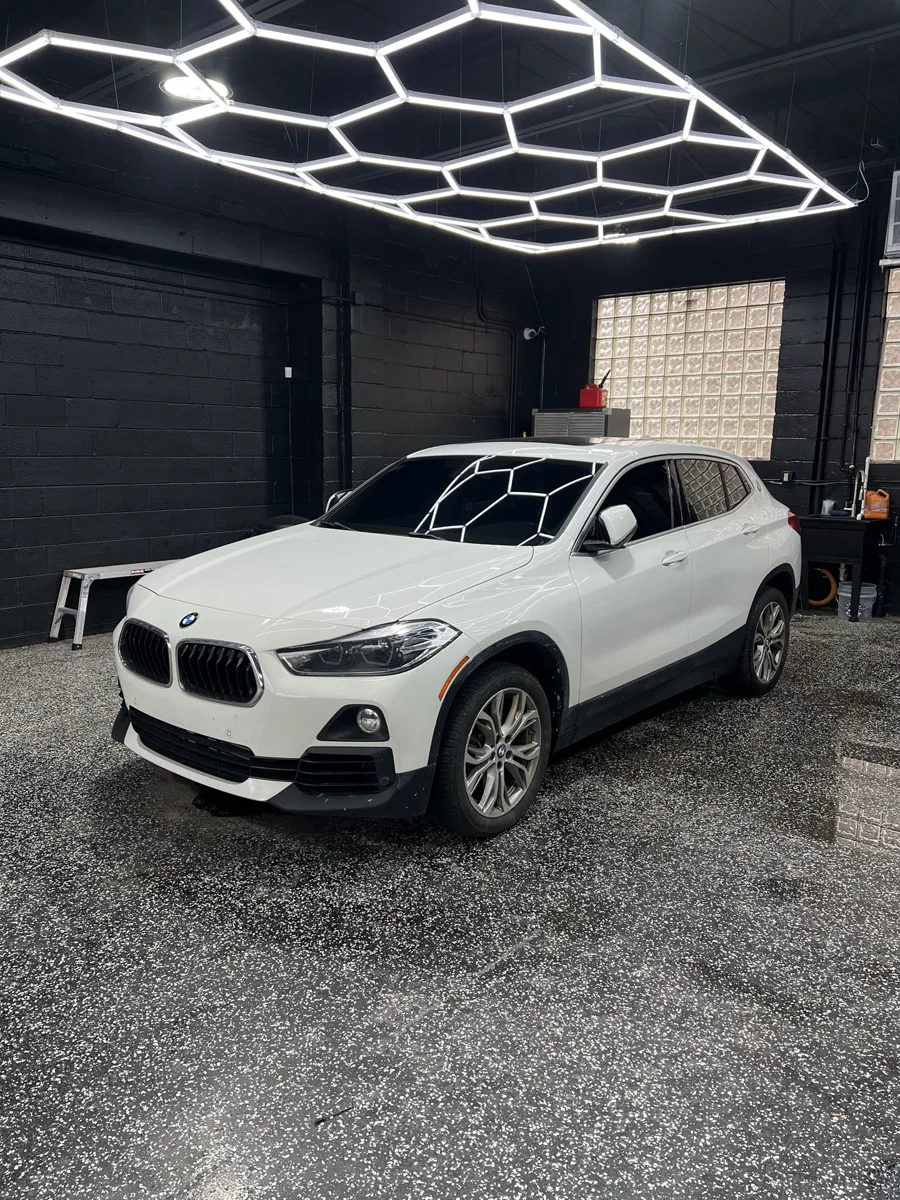
What is headlight tint?
It is a smoked film on the headlight lens, chosen for the look. We look at the lamp, the beam, and the car before we agree to put it on.
A clear housing on a black car reads bright, and people ask to calm it down. Smoke film does that. It also steals some of the light the lamp was built to throw. How much depends on the film and on the lamp behind it. A new projector and a yellowed ten-year-old reflector are not the same starting point. We will not copy a window-film sample onto a headlight and call it the same product.
Bring the car at a time when we can see the beam, or be ready to hear that we want the car after dusk before we commit. A photo taken in a bright shop can flatter a lamp that is marginal on a dark road. We would rather decline a job than hand you keys and hope. The service page is headlight tint. The landing page that pairs lamps front and rear is headlight and taillight tint.
Yellowed lenses are a different problem. Film does not restore a lens that has gone cloudy. If the plastic is oxidized, say so. We may tell you the lens needs attention before any film is worth discussing. We do not sell that as a side promise.
How is smoked tint different from clear headlight film?
Clear film is there to take chips. Smoked tint is there to change the color. One protects the lens. The other changes how the lamp looks and how much light gets out.
Paint protection film on a headlight is clear, and the point is rock chips on the highway. You should not notice it at night. Smoked tint is the opposite priority: you notice it in the driveway, and you have to be honest about night driving. A lot of trucks want both conversations, and they should stay separate on the quote. The comparison is clear headlight film or smoked tint. Clear film lives with the rest of the paint protection film work.
If the hood and bumper are being filmed for chips, clear lamp film is a natural add because the lamps sit in the same debris path. Smoke is a style add. Do not let a package name blur them. Ask which one is on the line item. A new truck often needs the clear film first and the smoke only if you still want it after you have seen the beam.
Stacking smoke on top of clear protection is something we will discuss on the actual lamp, not promise from a photo of someone else's car. If the stack would leave the beam too weak, we will say no to the smoke and still do the clear film. You get to disagree. We get to decline.
What about taillights?
Taillight film darkens the rear lamps so they match the car. They still have to read as brake lights and tail lights to the person behind you.
A smoked taillight can look right in a photo and wrong in traffic if the red is too far gone. We look at the lamp lit, brakes on, before we treat it as a yes. Sequenced turn signals and a light bar in the hatch are part of that look. Tell us if the car has them. A hatch that is one big red panel is a different piece of film from two small lamps on a truck.
Taillights take less rock abuse than headlights and more car-wash brushes. Edges matter. A brush that catches a corner will lift it. After the film has settled, wash by hand around the lamps or use a touchless wash, and do not aim a pressure washer at the edge of the film. That care note is the whole longevity plan. There is no secret spray.
If you only want the rears smoked and the headlights left clear, say so. We will not smoke the front because the rear was on the same work order. Sterling Heights and the rest of the metro use the same shop on 14 Mile for this. The truck page for glass, not lamps, is truck window tint.
How do you wash tinted lamps?
Hand wash, soft cloth, no abrasive polish, and keep the pressure washer off the edges.
Bug guts bake onto a headlight. Soak them. Do not scrape with a razor or a plastic card that has been in the sand. Polish made for cloudy lenses is a cutting product. It can haze smoked film or cut through it. If the lens was cloudy before the film, polish was the earlier conversation, not the later one.
Wax and ceramic detail sprays are for paint. Overspray on a smoked lamp can look like a stain. Wipe it off while it is wet. In winter, a brush at the tunnel is the main risk, same as on a wrap edge or a paint-protection edge. Touchless is the kinder habit. If a corner lifts, call. Do not glue it. Glue clouds the lens from the inside of the film and we cannot tidy that.
Winter road film on the lens is just dirt. A damp cloth takes it off once the film has settled. De-icer belongs on the outside of glass windows, not as a bath for a fresh lamp edge. If you wash the car the day after the lamps are done, keep the nozzle off the borders and let the film have a quiet stretch before you judge the edges.
If you already know the vehicle, send it now and we will quote that car.
What will the shop turn down?
Film that leaves the beam too weak for the roads you actually drive, and any job we have not seen on the car.
A photo of someone else's car is not a work order. Lamp shapes differ. A low sports-car lamp and a pickup lamp do not take the same sheet, and they do not start with the same amount of light. If we think the smoke is too much for that housing, we will say no or we will show you a lighter film.
We also will not promise that a smoked lamp matches a window shade. They are different materials on different parts of the car. If you want the glass done too, book it as glass. Ceramic window tint is From $75 as the starting point for that film, on the ceramic window tint page, and it has nothing to do with the price of a lamp. We do not publish a headlight price here. The quote is the number.
Elite Auto Lab is at 436 E 14 Mile Rd, Madison Heights, MI 48071, a short hop off I-75. Hours are Monday through Friday, 10 to 6, and Saturday, 10 to 3. Call (248) 881-8204. Financing via Affirm is available for a quote you have accepted. Same-day service is possible when the lamps are a small visit and the day is open. We will say which visit is which before you leave the car.
What should you bring to the quote?
The car, a clear idea of front, rear, or both, and honesty about night driving. Highway miles at night are a different request from a car that moves mostly in daylight.
If the car is a daily driver on unlit roads, say that first. If it is a fair-weather car, say that too. We can have a more open conversation about smoke on a car that is home before dark, and a stricter one on a car that does 696 after sunset. Neither answer is a slogan. It is the beam.
Mention cracks, moisture inside the lamp, and any film already peeling from a previous try. Moisture inside a housing is a lamp problem, not a film problem. We will not seal water in and call it tint. If you also want the chrome trim around the lamps quieted, that is chrome delete, a vinyl job, and it should be on the same quote only because you asked.
A sentence on the quote form with the year, make, and model is enough to start. If you can, add whether the lenses are clear or already cloudy. That one fact changes the conversation more than the paint color does.
Bring the car and tell us which lamps you want smoked. We will look at the beam before we agree, and we will quote only the work we are willing to do.