Protecting a New Truck Before the First Winter
A new truck looks tall enough to be safe from road junk. The hood says otherwise. It is a long, flat target, and the headlights sit right in the spray. Michigan adds salt to the rockers and the lower doors, and the cab glass is still just glass. Protecting the truck means picking the panels that actually get hit, filming the lamps if chips are the worry, and deciding what you want from the windows. It does not mean pretending the truck is invincible.
Start with truck PPF and tint. Related reading: truck window tint.
Tell us the year, make and model. The quote is free, and we reply the same business day.
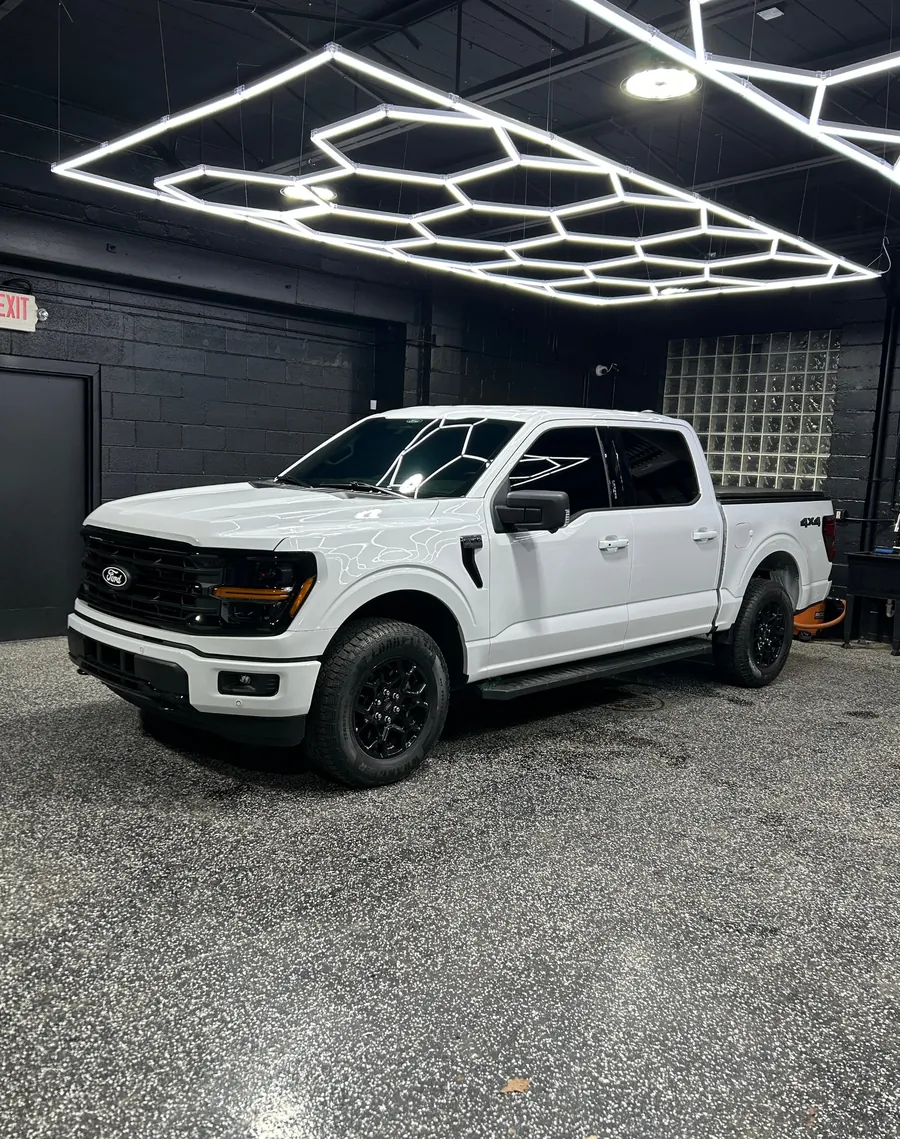
Where does a new truck actually get hit?
The leading edge of the hood, the bumper, and the headlights. Rockers and the area behind the front tires collect the rest, especially if you tow.
Truck hoods are long. A stone that would have gone under a sedan can land halfway back on a pickup hood. That is why the hood is not an optional extra on a highway truck. The bumper still takes the first volley. Mirrors take brush hits in a wash and stones from the next lane. We mark those on the truck you brought. A hood deflector changes where the film has to end. Tell us if one is on the truck or coming.
Clear film on the headlights is the chip conversation. Smoked tint on the headlights is a look conversation, and it has to survive night driving. Those are different products. The split is clear headlight film or smoked tint. The truck service page is truck tint and protection.
Tow mirrors are larger than car mirrors and they take stones when you pass a trailer. If you tow, say so. The mirror caps move up the list. A badge, a washer nozzle, and a hood bulge all interrupt the sheet. We would rather tuck those than stretch film over them and hope.
What about the bed, the rockers, and the tailgate?
The bed is a work surface. Film on it is about scratches from cargo, not highway stones. Rockers are about salt spray and gravel from the tires.
A bed that hauls brick and a bed that stays empty are different asks. Film can take light abrasion. It will not survive a dropped hitch as if nothing happened. If you want the bed filmed, say what you haul. If you do not, we will not add it to look thorough. The tailgate is visible and it takes stones when you follow traffic. It is a reasonable add on a clean new truck. It is not automatic.
Rockers and the lower doors see brine all winter. Film there is a barrier between that spray and the paint. It does not replace rinsing the truck. Salt left to sit is still salt. A coating on those panels makes washing easier and still will not take a stone. If you want both on the lower body, the order is film, then coating, as in coating on top of PPF.
The bed rail and the top of the bedside see boots, cargo, and tie-downs. That is abrasion, not highway pepper. If the truck is a job-site truck, tell us what climbs in and out. If it is a clean commuter that happens to be a pickup, the hood and the lamps still come first and the bed can wait.
What should you do about the cab glass?
Decide whether you want heat cut in the cab, and say so as window film, not as paint film.
A truck cab in July is a greenhouse with a big windshield. Ceramic film is what we suggest when the seat and the wheel cook. Carbon is the other option. Ceramic window tint is From $75 as a starting point. The truck quote names the glass you want filmed. It is not a bundled truck package. The landing page is truck window tint. Care after the film is caring for new window tint.
Rear sliders are their own piece of glass. Mention the slider so the quote includes it if you want it, and so removal of any old film accounts for the track. Do not peel old film out of a slider with a knife. That job is tint removal if the previous owner left you a mess.
A cap or a camper shell changes the rear glass story. If the cap has its own windows, say whether those are in the visit. We do not assume a cap glass is the same film job as the cab. Tell us if the cap comes off seasonally, because film on a panel you remove should be planned, not discovered.
When should the work happen?
Before the first winter on the freeway, while the hood is still straight. Film does not erase chips you already collected on the way home from the dealer.
Dealer washes leave swirls on trucks the same way they do on cars. Look at the hood in a raking light, or let us. If you want those marks gone, correction is a separate line before film. If you can live with them, film anyway and you will see them. The new-car logic is the same as PPF on a new car, with more hood.
A level kit, a winch, and a bumper you are about to replace all change the plan. If the factory bumper is coming off next month, do not film it this week. Tell us the build order. We would rather wait a panel than film a part that is going in the scrap pile.
If a bug deflector is not on the truck yet, mention the plan. The film edge and the deflector fight if they are designed separately. We can stop the film where the deflector will live, or film first and let you tell the deflector installer where the sheet ends. Either way, say it before the film is cut.
If you already know the vehicle, send it now and we will quote that car.
How do you wash a filmed truck in winter?
Rinse the brine, wash with a mitt, and keep the tunnel brush and the pressure washer off the film edges.
A truck collects more salt on the rockers than a car does, because the tires throw it up the side. Rinse those panels. Do not let a brush tunnel be the rinse. The brush finds the edge of hood film and the edge of lamp film. Touchless is kinder. A nozzle used to peel mud off a rocker should be aimed at the middle of the panel, not up under the film.
Bugs on the hood of a truck bake at face height. Soak them. The film makes that kinder than bare paint. It does not make them optional. A self-healing top coat can relax light marks with warmth. A tear gets a patch. Call before you trim anything with a blade.
After a storm, a rinse is enough. You do not need a full wash every time the roads are white. You do need the salt off the lower panels before it sits for a week. That habit matters more than any spray bottle sold as a film renewer.
What goes on the quote?
Cab and bed configuration, whether the hood and lamps are in, whether the glass is in, and any bumper you plan to change.
The shop is 436 E 14 Mile Rd, Madison Heights, MI 48071, off I-75. Open Monday to Friday 10 to 6, Saturday 10 to 3. Call (248) 881-8204 or use the quote form. Financing via Affirm is available after you have the number. Bloomfield Hills and Sterling Heights trucks come to the same door. The local page is truck window tint in Bloomfield Hills. We install the paint film as XPEL, SunTek, or 3M, and we will name which one is on the invoice.
There is no truck package that silently includes tint, hood film, and lamps. You will see the lines. Same-day service may fit the glass. A hood is a different kind of day. Ask. We will not guess the book from the badge on the grille.
Warren and Madison Heights trucks get the same questions. The badge does not change the gravel. If you also want door lettering because the truck works, that is a commercial graphic, and it is a different invoice from clear protection.
Tell us the truck, what you tow or haul, and whether you want the hood, the lamps, the glass, or some mix. We will quote the panels you name.